Black Grit
Black Grit
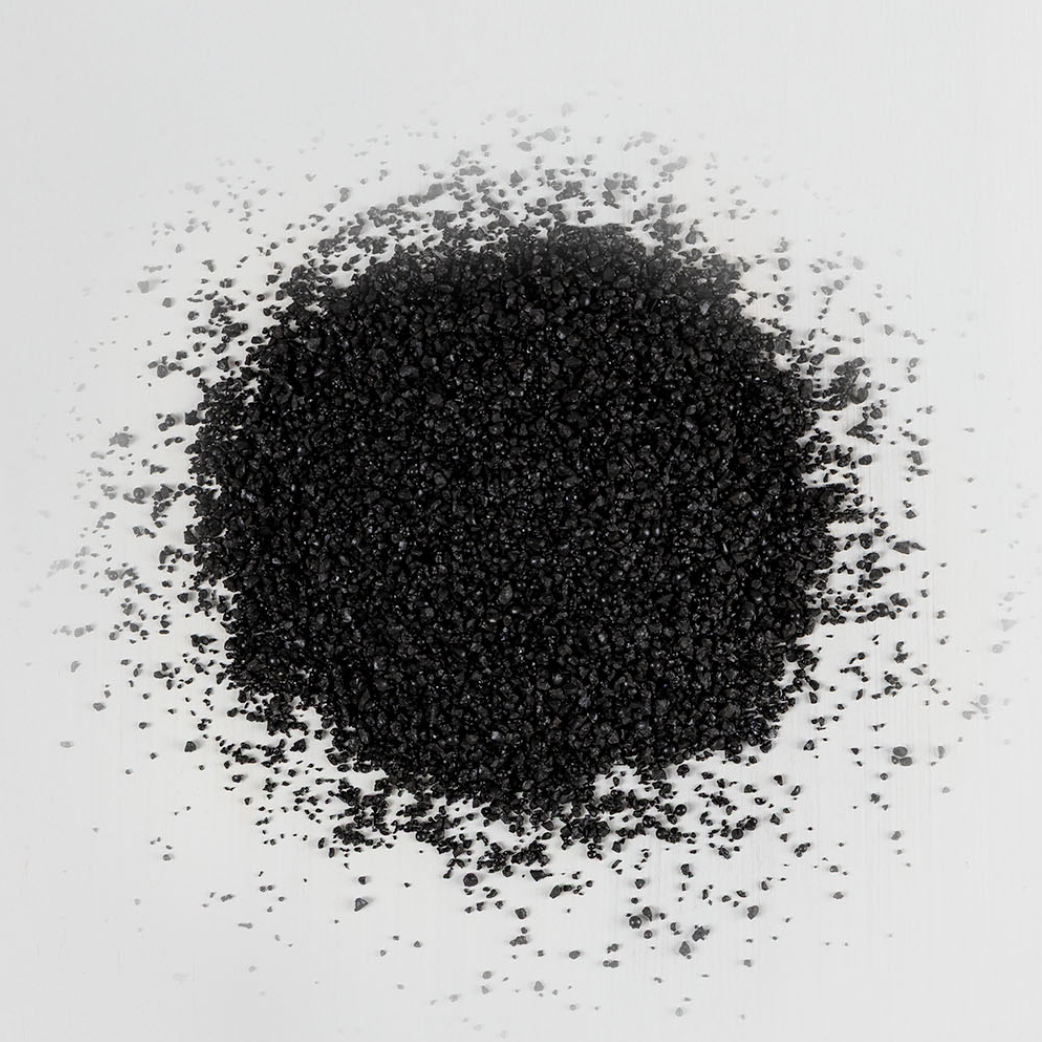
Black grit is a produced from mineral slags obtained as a by-product of industrial furnace operations. It is predominately iron silicate and is used to replicate the black kiln inclusions seen in historic mortars. Black grit does not colour mortars in the way that the coal ash or charcoal will and can be added in greater concentration without greying the mortar.
Couldn't load pickup availability
Black Grit
Learn more
Usage/Purpose
For the repair or reinstatement of Roman Cement renders and mouldings.
Shelf Life
Hydraulic limes and natural cement deteriorate with age. Use fresh material.
Colour
Mortar colour is determined by the sand or aggregate mixed with the hydraulic lime or natural cement. It is normally necessary to include brick dust and sometimes also earth pigments to match the colour and texture of historic samples.
Observations
Experienced operatives with experience of the successful use of hydraulic lime or Natural Cement should be employed. Accurate volumetric site mixing is essential. Hydraulic lime mortars do not behave as modern cementitious materials, and set by a combination of the hydration of the hydraulic compounds and ‘carbonation’. Carbonation in the presence of moisture is a slow process and the control of the drying and curing by ‘tending’ and protecting is crucial to success and long term performance. Protections are essential.
Application
Hydraulic lime mortars do not behave as modern cementitious materials, and set by a combination of the hydration of the hydraulic compounds and ‘carbonation’. Carbonation in the presence of moisture is a slow process and the control of the drying and curing by ‘tending’ and protecting is crucial to success and long term performance. Protections are essential. Do not use below a temperature of 5°C or above 25°C. Do not use if there is risk of frost.
Availability
Hydraulic Lime and Natural Cement normally ex stock. It is important to select the correct grade of hydraulic lime.